 Saqib
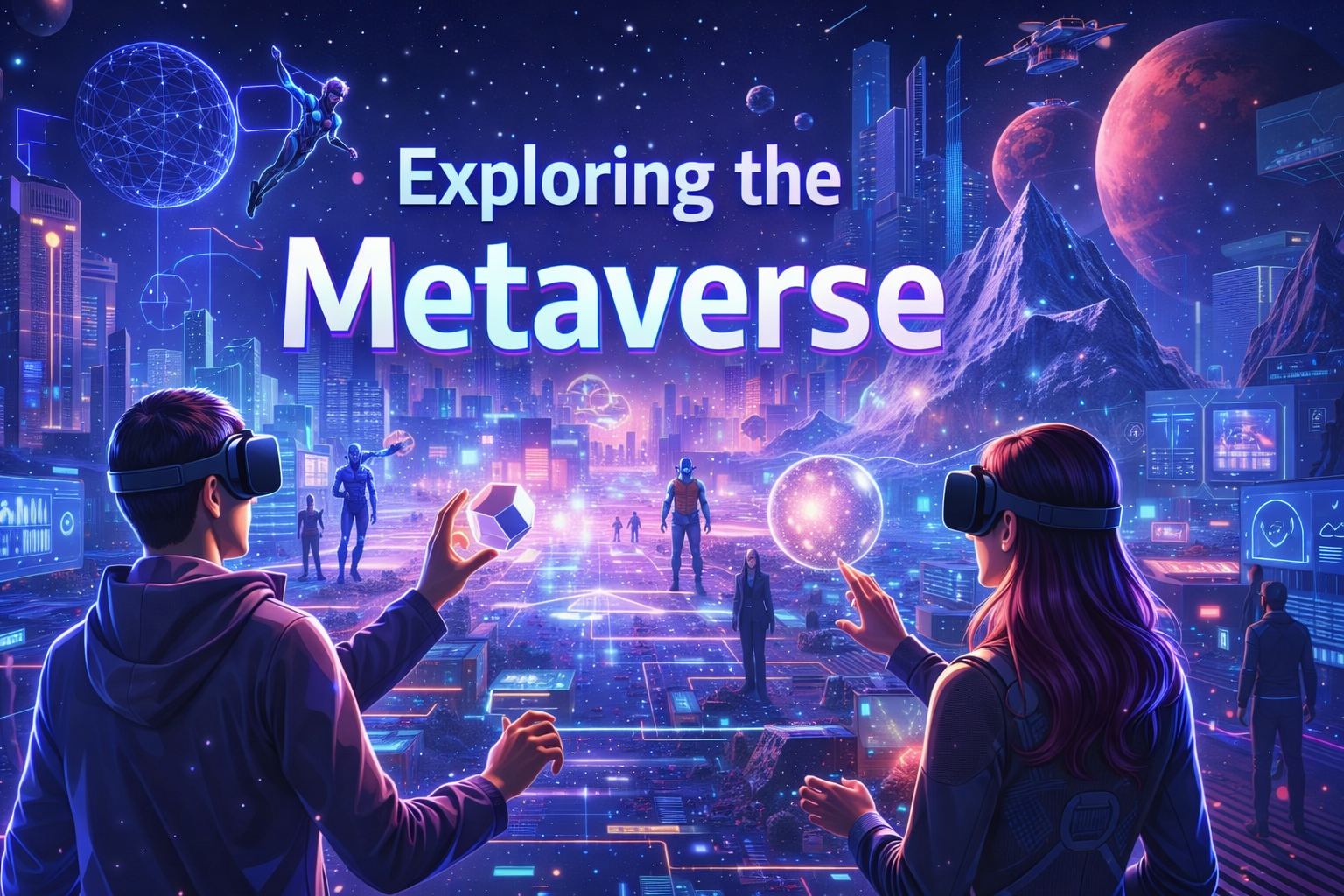
Saqib The Metaverse is no longer just a sci-fi concept—it’s rapidly becoming a reality. Described as a collective virtual shared space, the Metaverse merges augmented reality (AR), virtual reality (VR), blockchain, and social media into immersive digital experiences. It promises to revolutionize how we interact, work, and play online.
What is the Metaverse?
At its core, the Metaverse is a virtual universe where users can interact with each other and digital objects in real time. Think of it as the internet—but instead of browsing websites, you experience them. You can attend virtual concerts, explore digital cities, collaborate in 3D workspaces, or even buy virtual land and assets.
The Metaverse is powered by technologies like VR headsets, AR devices, 3D graphics, and blockchain, which ensures ownership and security of digital assets like NFTs.
How the Metaverse is Changing Digital Interaction
The potential of the Metaverse goes far beyond gaming:
- Social Interaction – Users can meet, socialize, and collaborate in immersive virtual spaces. Friends or colleagues feel like they’re in the same room, no matter the distance.
- Entertainment – Virtual concerts, live events, and gaming experiences create a new dimension of fun and engagement.
- Work and Collaboration – Companies are exploring virtual offices where teams can interact in real-time, improving remote collaboration.
- Commerce – The Metaverse introduces digital marketplaces where users can buy, sell, and trade virtual goods and NFTs.
Advantages of the Metaverse
The Metaverse opens up endless possibilities:
- Immersive Experiences – Users can fully engage with content in ways not possible on traditional platforms.
- Global Connectivity – People from across the world can connect in shared virtual spaces.
- Innovation Opportunities – Creators, developers, and entrepreneurs can explore new business models.
- Education and Training – Virtual simulations allow for hands-on learning in fields like medicine, engineering, and aviation.
Challenges and Considerations
While the Metaverse is exciting, it comes with challenges:
- Privacy and Security – Personal data and digital assets must be protected.
- Accessibility – High-tech equipment is still costly, limiting adoption.
- Regulation – New rules are needed to govern virtual economies and interactions.
The Future of the Metaverse
The Metaverse is expected to grow into a parallel digital universe over the next decade. As technology improves, we will see more realistic avatars, smarter AI-driven environments, and seamless integration with real-world applications.
The Metaverse is not just about entertainment—it’s a new digital frontier that has the potential to change how we live, work, and interact forever.
Conclusion
From gaming to business, the Metaverse is redefining what’s possible in the digital world. As it continues to evolve, early adopters and innovators will shape the future of this virtual universe. The Metaverse isn’t just coming—it’s here, and it’s ready to change everything.
 Saqib
Saqib
Hi, this is a comment.
To get started with moderating, editing, and deleting comments, please visit the Comments screen in the dashboard.
Commenter avatars come from Gravatar.